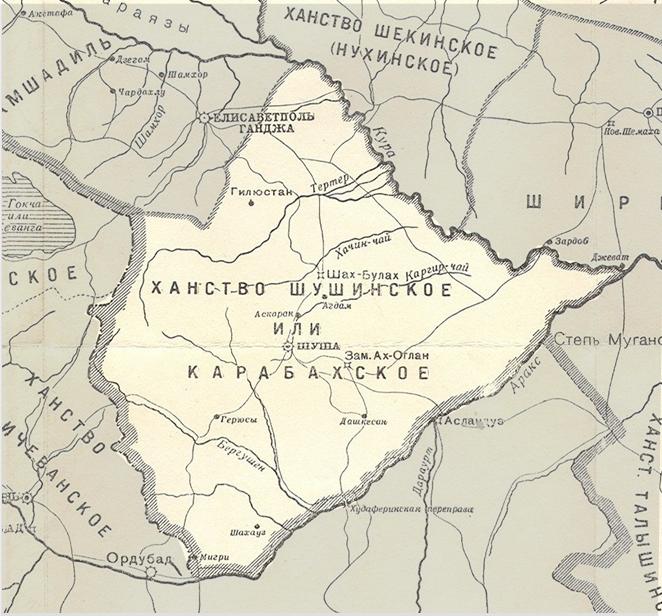
Karabakh and Khojavend in the Russian empire period. Beginning of
Armenian claims
 BIn April 1956, the new first secretary of the Communist Party of the
Armenian SSR S.Tovmasyan in his message to Moscow said that there were
the calls at a party meeting in Yerevan University and at the meeting of
the Union of Armenia Writers for the revision of borders with Azerbaijan
SSR, the unification of Nagorno Karabakh and Nakhichevan to Armenia. BIn April 1956, the new first secretary of the Communist Party of the
Armenian SSR S.Tovmasyan in his message to Moscow said that there were
the calls at a party meeting in Yerevan University and at the meeting of
the Union of Armenia Writers for the revision of borders with Azerbaijan
SSR, the unification of Nagorno Karabakh and Nakhichevan to Armenia.
The Armenian Gregorian Church contributed to the strengthening of
nationalist opinions among the Armenians. After the Second World War the
Armenian Gregorian Church resumed its activities, recovering from
repressions of second half of the 30's. In general, the orientation in
the activities of the Armenian Church purely was to the national policy
objectives and traditionally prevailed over proper religious functions.
The Church has long served as a starting point for connection of
Armenians settled in different countries, various political regimes and
denominational environment. [more] |
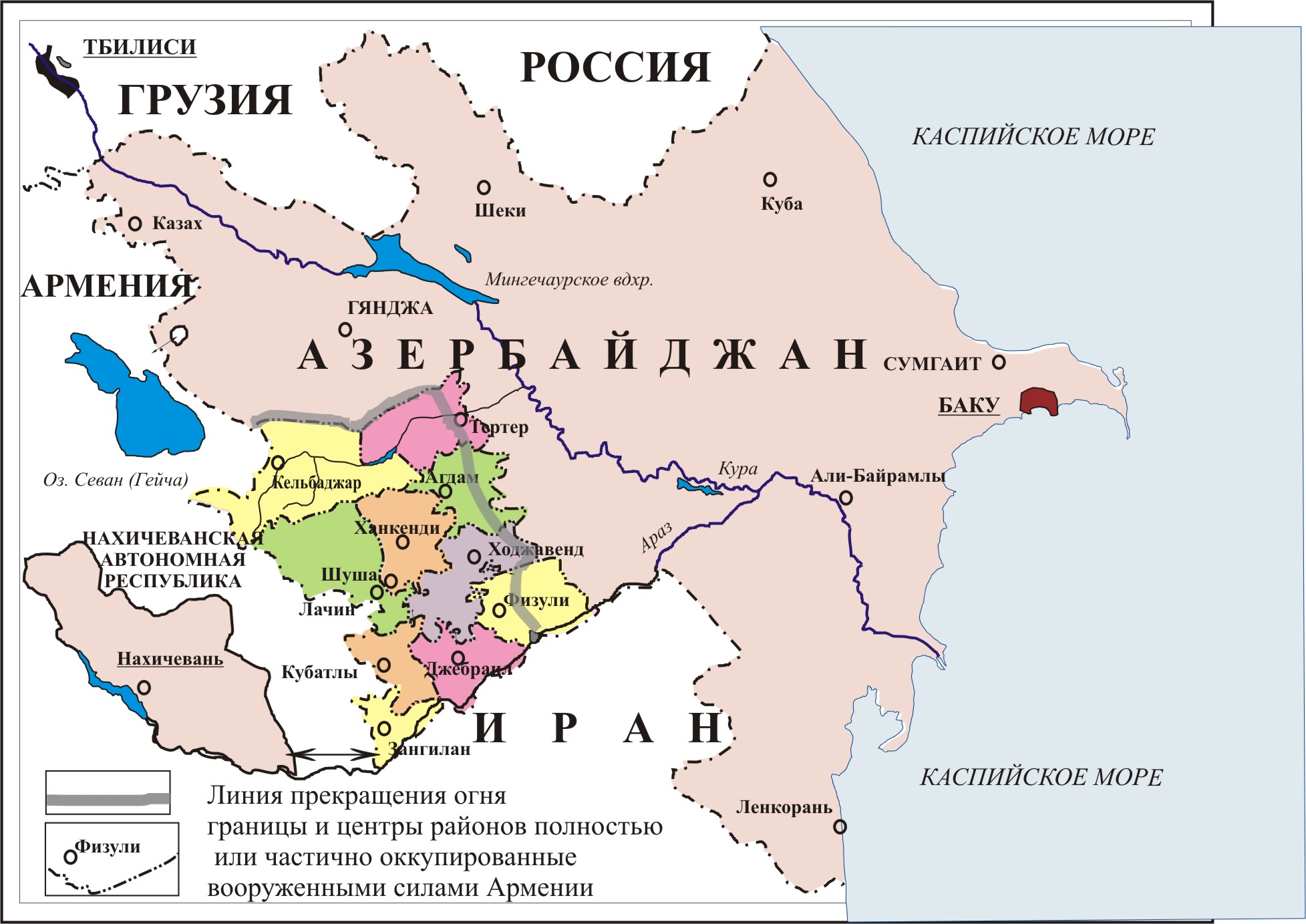
Brief history of Karabakh and the Armenian claims.
 Coming to the Caucasus in various periods of history, “Armenians” were
unaware of each other's existence, and spoke different dialects, that is,
there was no concept of a common Armenian language. Coming to the Caucasus in various periods of history, “Armenians” were
unaware of each other's existence, and spoke different dialects, that is,
there was no concept of a common Armenian language.
When speaking of the presence of “Armenian natives” or “indigenous
Armenian Karabakh inhabitants” in Karabakh and Azerbaijan, historians of
the Caucasus Studies mean Caucasian Albans who had not accepted Islam
and professed instead the Armenian Gregorian faith, turning to Armenians
only 3-4 centuries ago.
Since time immemorial, the tolerant and hospitable Caucasus was a “safe
haven” for peoples fleeing the tyranny of large empires and religious
persecution. Gradually, the ancestors of Armenians found home in the
South Caucasus, where they inhabited the lands of Azerbaijan, as well.” [more] |
Summer 1967. Instigation by Armenians in Kuropatkino village and
its consequences
 However, the decision of the Stepanakert court caused uproar among the gathered there Armenians, eager to lynch three Azerbaijanis. They believed that the sentence against the director was mild, and they also wanted to punish the third accomplice. Enraged Armenians attacked the prisoners in the court, guards tried to bring them to the back door and even seat in a police car, but the Armenians were too much, they did not let them leave. However, the decision of the Stepanakert court caused uproar among the gathered there Armenians, eager to lynch three Azerbaijanis. They believed that the sentence against the director was mild, and they also wanted to punish the third accomplice. Enraged Armenians attacked the prisoners in the court, guards tried to bring them to the back door and even seat in a police car, but the Armenians were too much, they did not let them leave.
The crowd turned over the car, by force pulled out the sentenced men and organized the lynching on the spot: scored them to death, and then completely burned their corpses. Then it became clear that too passive local Armenian authorities tried to protect the Azerbaijanis prisoners, and Armenians crowd actually was previously prepared and instructed to lynch Azerbaijanis.
Someone in Stepanakert and Yerevan wished to push here Armenians and Azerbaijanis and present to the Soviet leadership as impossibility to live together of two nations, and therefore the need to transfer Nagorno-Karabakh to the Armenian SSR. [more] |
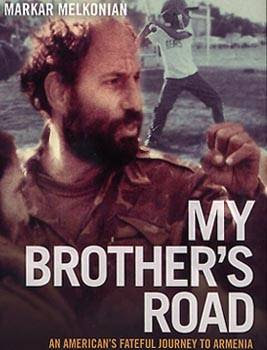
Markar Melkonian on Armenian atrocities in his book "My Brother’s Road"
 "...
In November 1990 Kechel had kidnapped a young Azerbaijani Popular Front
activist from a village across the border. The Young Azeri, Syed, spent
a month chained to the wall of a cottage near Yerevan. On New Year’s Eve
1991, Kechel and a couple of buddies, including a local police officer
and their friend Ardag, dragged their captive to the top Yeraplur, the
burial hill near Yerevan. There they kicked Syed to his knees under a
spreading tree next to the grave of fellow fighter named Haroot. Then
Kechel, a father of three children, began cutting Syed’s throat with a
dull knife. At first Syed screamed, but after a while the screaming gave
way to moaning and gurgling. Finally, when Ardag could no longer listen,
he pushed a knife into Syed’s chest, putting an end to it. They drained
Syed’s blood on top of Haroot’s grave and then left." [more] "...
In November 1990 Kechel had kidnapped a young Azerbaijani Popular Front
activist from a village across the border. The Young Azeri, Syed, spent
a month chained to the wall of a cottage near Yerevan. On New Year’s Eve
1991, Kechel and a couple of buddies, including a local police officer
and their friend Ardag, dragged their captive to the top Yeraplur, the
burial hill near Yerevan. There they kicked Syed to his knees under a
spreading tree next to the grave of fellow fighter named Haroot. Then
Kechel, a father of three children, began cutting Syed’s throat with a
dull knife. At first Syed screamed, but after a while the screaming gave
way to moaning and gurgling. Finally, when Ardag could no longer listen,
he pushed a knife into Syed’s chest, putting an end to it. They drained
Syed’s blood on top of Haroot’s grave and then left." [more] |


